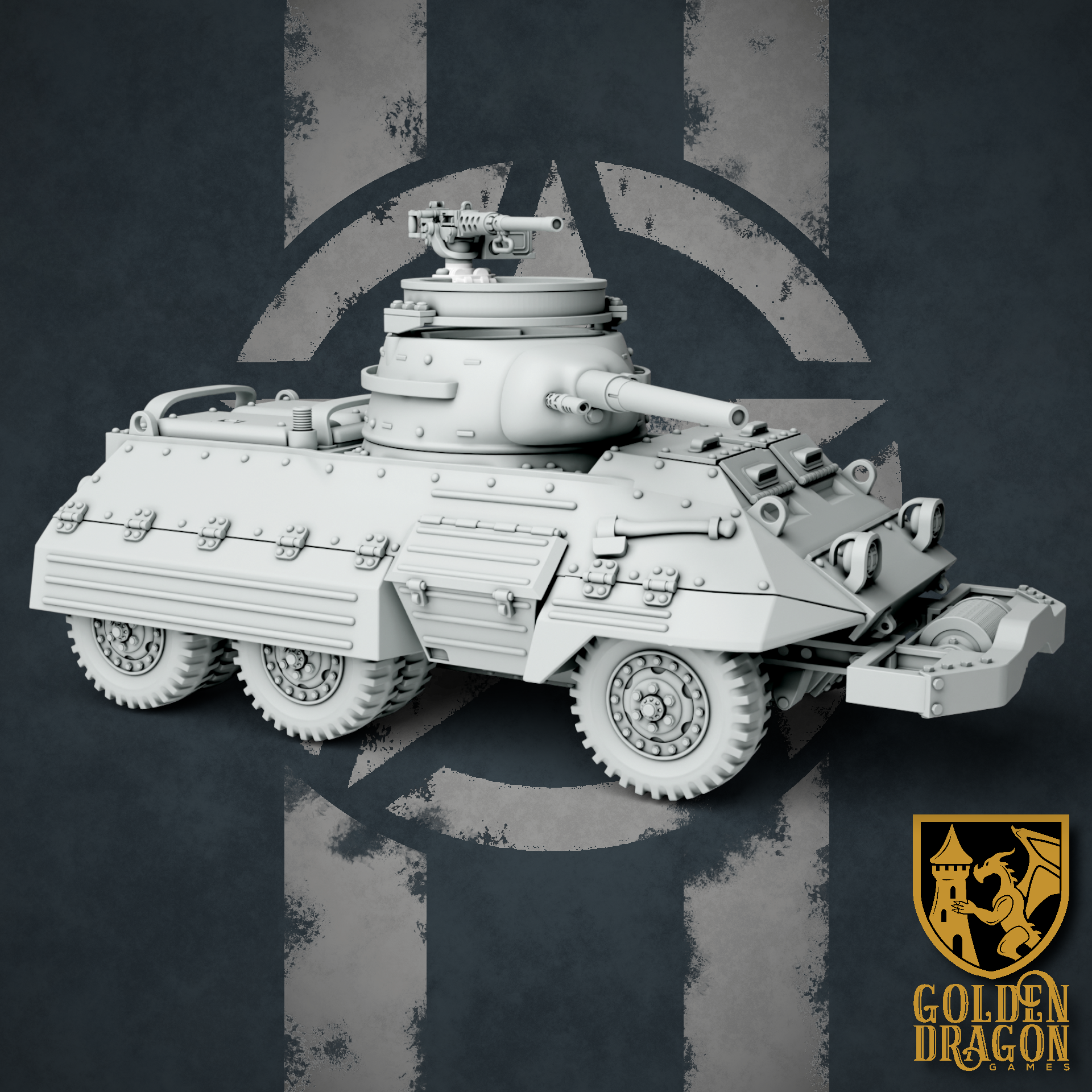
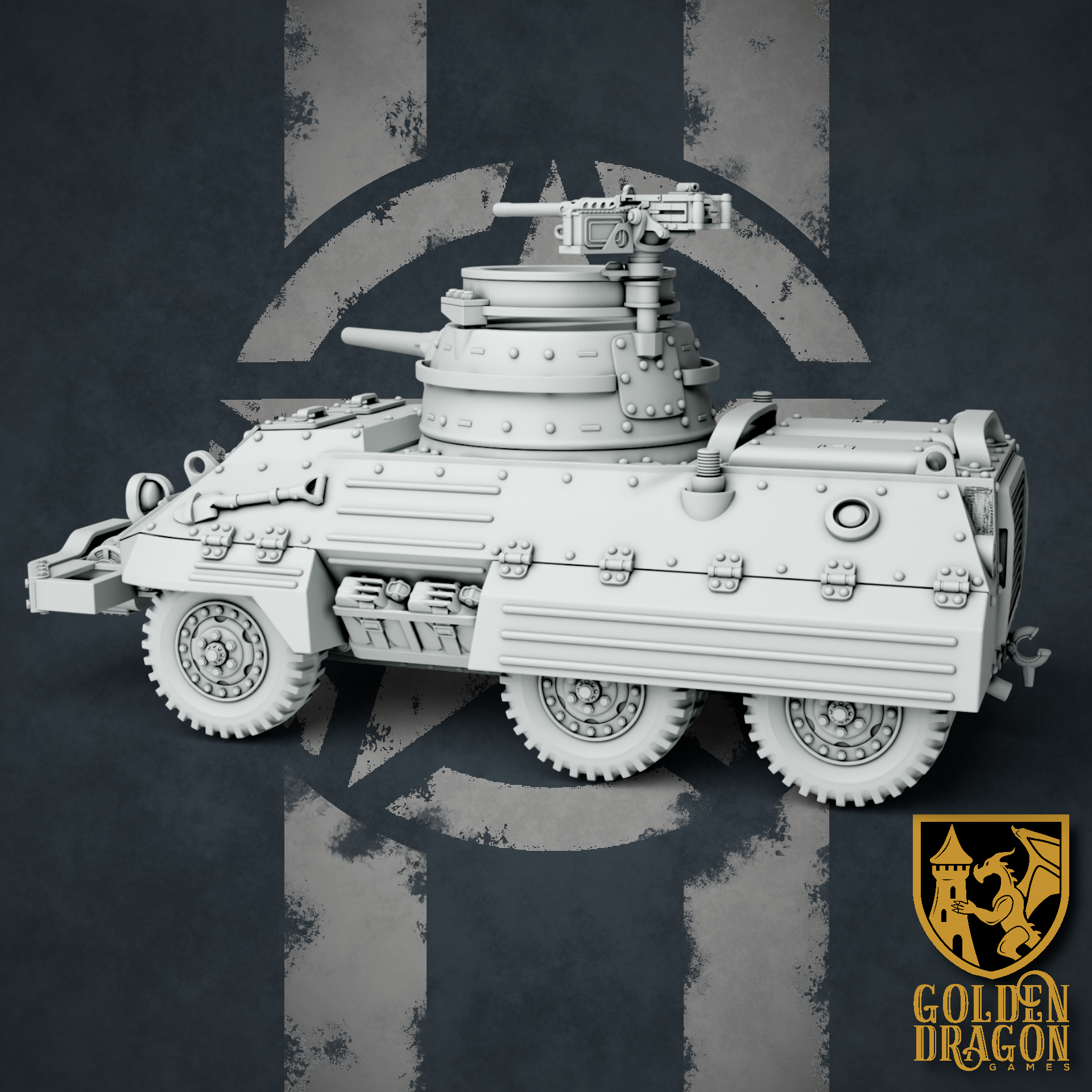
Golden Dragon – USA – M80 Raccoon Armored Reconnaissance Car
$40.00
Product may differ slightly from image.
Medium-sized multipart vehicle.
While the United States military was quick in the aftermath of the Carnegie Complex debacle to re-evaluate its standing on the newly emergent walker technology, the Great War came before these new vehicles had attained broader acceptance, critics of the program citing logistics and mechanical issues. Most famously, GHQ Chief of Staff General Lesley McNair compared the ordeal of loading the ungainly new walkers onto transport ships to trying to pack fishing gear on a city bus, and suggested that the walkers would only be able to see meaningful use in domestic theaters where they could transport themselves.
As a result of these growing pains in the Walker Corps, much of the United States Army began the war still utilizing conventional armored cars in reconnaissance and command roles, such as the now-venerable M80 Raccoon. While the vehicle’s armor and armaments could only be updated so much in the face of its more modern opposition, the old fleets of M80s served with distinction, being often cheaper, faster to deploy, and requiring less expensive repair work after engagements than the arguably superior walkers meant to replace them.